Request a price
Pour Point Tester
Pour Point Tester
The PourPointTester research device is a small-sized automated laboratory device for determining the pour point (pour point) of oil and petroleum products using the rotational method with high accuracy (according to the ASTMD5985 method).
Application- Determination of fluid pour point in accordance with ASTMD5985 standard
- Determination of pour point according to ASTMD97 standard (calculated by software)
- Determination of fluid temperature during the experiment
- Study of the effectiveness of depressants (additives) that increase the pour point of oil.
- Temperature range: - 55 C⁰ - +150 C⁰
Advantages- The presence of a modern thermoelectric module allows experiments to be carried out without the use of a cryostat;
- Small amount of coolant required;
- High reproducibility of the experiment;
- Compact dimensions;
- Possible use in field conditions;
- Safe transportation thanks to the presence of a convenient case on wheels (optional);
- Possibility of transporting the device in the aircraft cabin (if there is a case);
- Can be used anywhere in the world thanks to a wide range of input voltages;
- User-friendly software;
- Ability to save up to 10 different experiment configurations offline;
- Fully automatic experiment execution;
- When using a computer, an unlimited number of experiment configurations can be saved.
Device software functions- Create and save an unlimited number of experiment configurations;
- Monitoring and control of experimental parameters;
- Display, save, process and export experimental data to Excel spreadsheet programs;
- Automatic preparation of an experiment report.
- When using the device without connecting to a computer (as a stand-alone instrument), it must be possible to save up to 10 different experiment configurations in the device’s memory.
Operating principle of the deviceIn accordance with the ASTMD5985 standard, the sample container rotates slowly (approx. 0.1 rpm) around its axis with a freely moving temperature sensor (rod) placed in the sample. If the viscosity of the sample increases (reaches the pour point) the temperature sensor (rod) deviates from the vertical position. During the experiment, the sample temperature is constantly measured with an accuracy of 0.1 °C. Thanks to the measured data (the angle of deflection of the rod and the temperature at which the deflection occurred), the freezing point of the fluid is automatically calculated in accordance with the standards. Accuracy: = ±0.1 ⁰С. The fluid temperature is measured directly by placing a temperature sensor (rod) in the fluid. Thermal behavior is determined during fluid cooling and provides insight into crystallization because crystallization slows down the cooling process.
To obtain accurate results, it is necessary to conduct the experiment at least 9 times and calculate the root mean square values of the freezing point.
Contents of delivery:Research system (main unit)
Measurement method: ASTMD5985 (more accurate than ASTMD97 / D5950 / D6749 / D5949 methods)
Temperature range: -45 to +150 °C (-49 - +257 °F)
Accuracy: 0.1 K
Availability of stand-alone display Weight: 9.5 kg (in 2 -3 times smaller than similar models of competitors)
Occupied area at the operator’s workplace: 28 x 39 cm
Cooler (no cryostat required)
Microprocessor
Power consumption: 110-240 V, 50-60 HzControl software
Windows-based software
Display temperature curve during pour point measurement
Data storage
Download experiment examples
Control up to 8 PPTs with one computer
Requirements: PC with Windows 7/Vista/XP, interface: RS232Personal Computer
monitor (19''), keyboard, mouse,
Windows 7 OS, pre-installed control softwareSpare parts kit
Spare sample containers 4 things. Connector for supplying water supply to the system, pipes for connection 2 m long 1 set Connector for draining water from the system, connection tubes 2 m long 1 set A set of documentation in Russian and English languages
Optional equipment:Specialized case for transporting the device (optional)
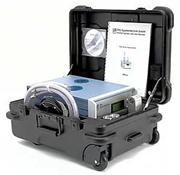
Heavy-duty case for PPT 45150 and accessories on wheels
Pre-cooler DLK
Recirculation chiller for supplying chilled water for PPT appliance
The use of DLK is an alternative solution when the tap water supply is weak and/or its temperature is high (> 20 °C) and/or its absence.
Energy consumption when cooling water to 10 °C: 480 WGenius pre-cooler
Recirculation chiller for supplying chilled water to the PPT device
Energy consumption when cooling water to -20 °C: 1 kW
Certified for PSL products
Includes a drain valve
Extension of the lower limit of the temperature range of the PPT device to -55 °C
Large tank sizeMono-ethylene glycol
Capacity: 20 l
Designed for precoolersTemperature calibration kit (optional)
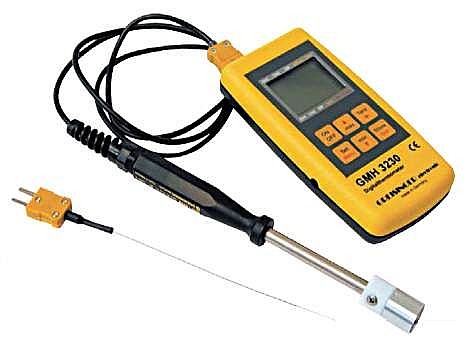
Automatic temperature calibration kit
- For all PSL devices
- Replaces recalibration service
- High precision digital thermometer
- Calibrated by EA/ILAC
- Cable set
Parameter Meaning Standards used
ASTM D5985 (rotational method)
Working temperature
-45 to +150 °C
Permission
0.1°C (0.1 K)
Accuracy
±0.2 K
Required sample volume
no more than 30 ml
Material of working parts
Stainless steel
Water consumption
up to 2 l/min
Cooling water pressure
1 – 6 bar
Cooling water temperature
3 - 20 °C
Energy consumption
1700 W
Mains voltage
110 – 240 V (50 – 60 Hz)
Weight, no more
9.5 kg
Weight with case, no more
14 kg
Overall dimensions (assembled), no more
260 x 380 x 430 mm
Overall dimensions (in case), no more
400 x 530 x 240 mm
Desk footprint
28 x 39 cm
Possibility of transportation to the field
Present
Possibility of connecting to a computer
Present
Possibility of autonomous operation
Present

| Model | Pour Point Tester |