Request a price
Four ball friction machine
FBT-3
The DUCOM four-ball friction machine is designed to determine the anti-wear (WP), extreme pressure (EP), friction and fatigue properties of lubricants.
As shown in Fig. 2, the device uses four balls: three at the bottom and one at the top.
The three lower balls are held securely in the container containing the lubricant to be tested and pressed against the upper ball. The top ball rotates at the desired speed, while the three bottom balls are pressed against the top one. The lubricant being tested is characterized by measuring the diameter of the wear scar on the balls after testing and assessing the load at which the lubricant fails and the four balls are welded into one.
The DUCOM FBT-3 is capable of reaching a maximum load of 10,000 N, a maximum speed of 3,000 rpm and a maximum temperature of 120 °C. It can meet ASTM, DIN and IP test standards for WP and EP parameters of any lubricants.
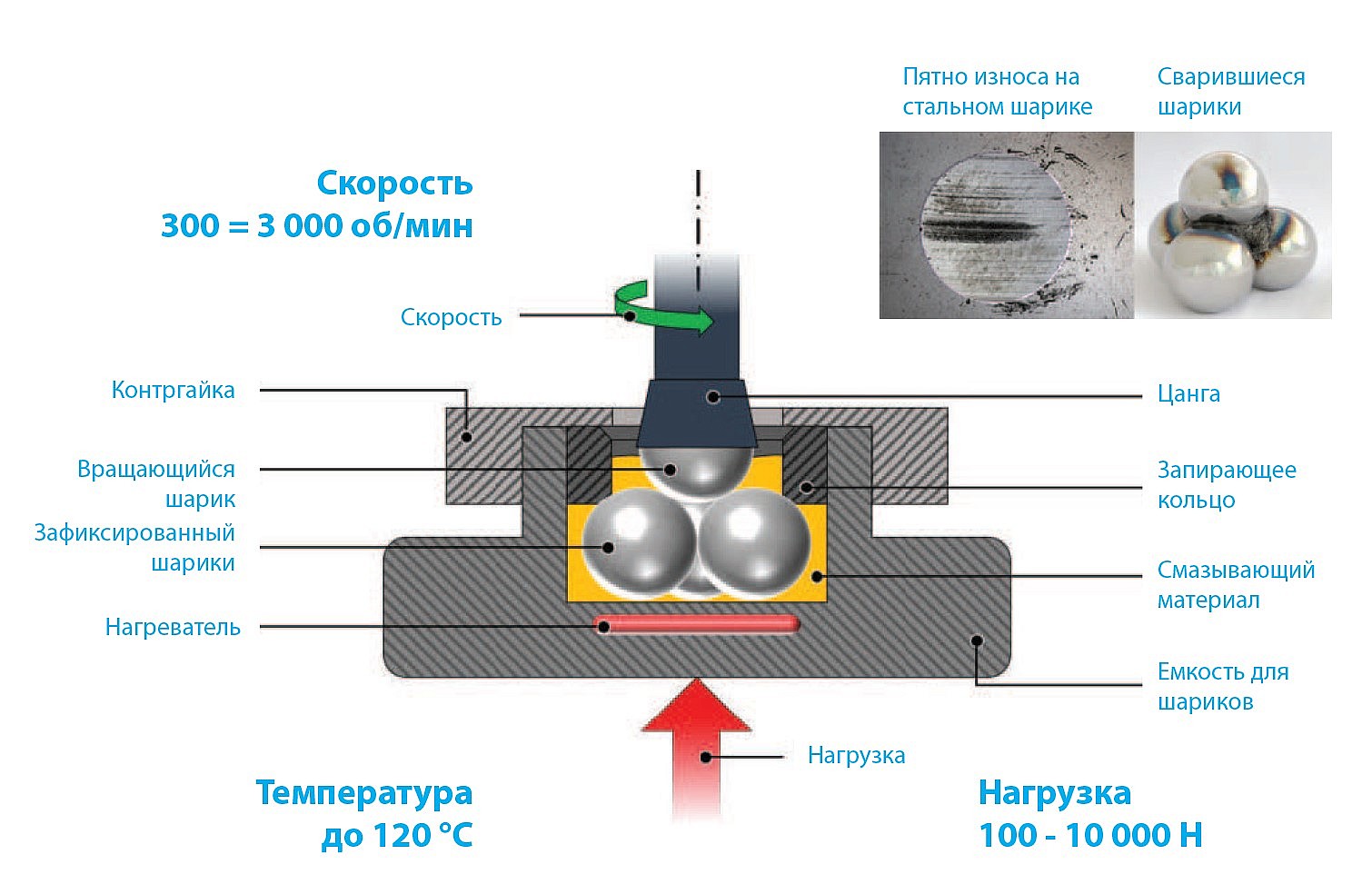
Rice. 2. Diagram of the test area in FBT-3.
Experiment with lubrication
Experiment with oil
APPLICATION AREA- Determination of anti-wear (WP), extreme pressure (EP), friction and fatigue properties of lubricants.
- Comparative tests of lubricants.
- Measurement and comparison of WP/EP properties of nanoparticles derived from carbon, metal oxides, sulfides and nanocomposites.
- Comparison of lubricant performance at various loads and temperatures, factors of base oils, additives, suppliers, etc.
- Comparison and assessment of lubricant quality deterioration depending on the degree of oil wear.
- Study of the characteristics of polymeric materials in lubricants used to achieve better shear resistance and minimize viscosity loss.
- Effectiveness of using biodegradable/vegetable oils for lubrication compared to mineral/synthetic base oils.
Principle of operationThe DUCOM Four Ball Analyzer (FBT-3) is an automated benchtop device that monitors the load, speed and heat applied to a lubricant. In Fig. Figure 3a shows the three main blocks of the four-ball analyzer. At the bottom there is a load control unit. It consists of pneumatic chambers, a piston and a normal load sensor, they work in tandem to achieve a user-specified load level. The lubricant test area (Fig. 3b) is located in the center of FBT-3. It is a container with balls mounted on an anti-friction pad connected to a loading device. As shown in Fig. 3d, the ball container consists of several components, such as three test balls, a lock nut and a ring, which need to be installed manually. The container with the balls is filled with lubricant, after which testing can begin. The test area has a sliding door to prevent lubricant leakage. It must be closed during the test for the safety of the user. A frameless motor is installed in the upper block, which drives the spindle using a ball collet.
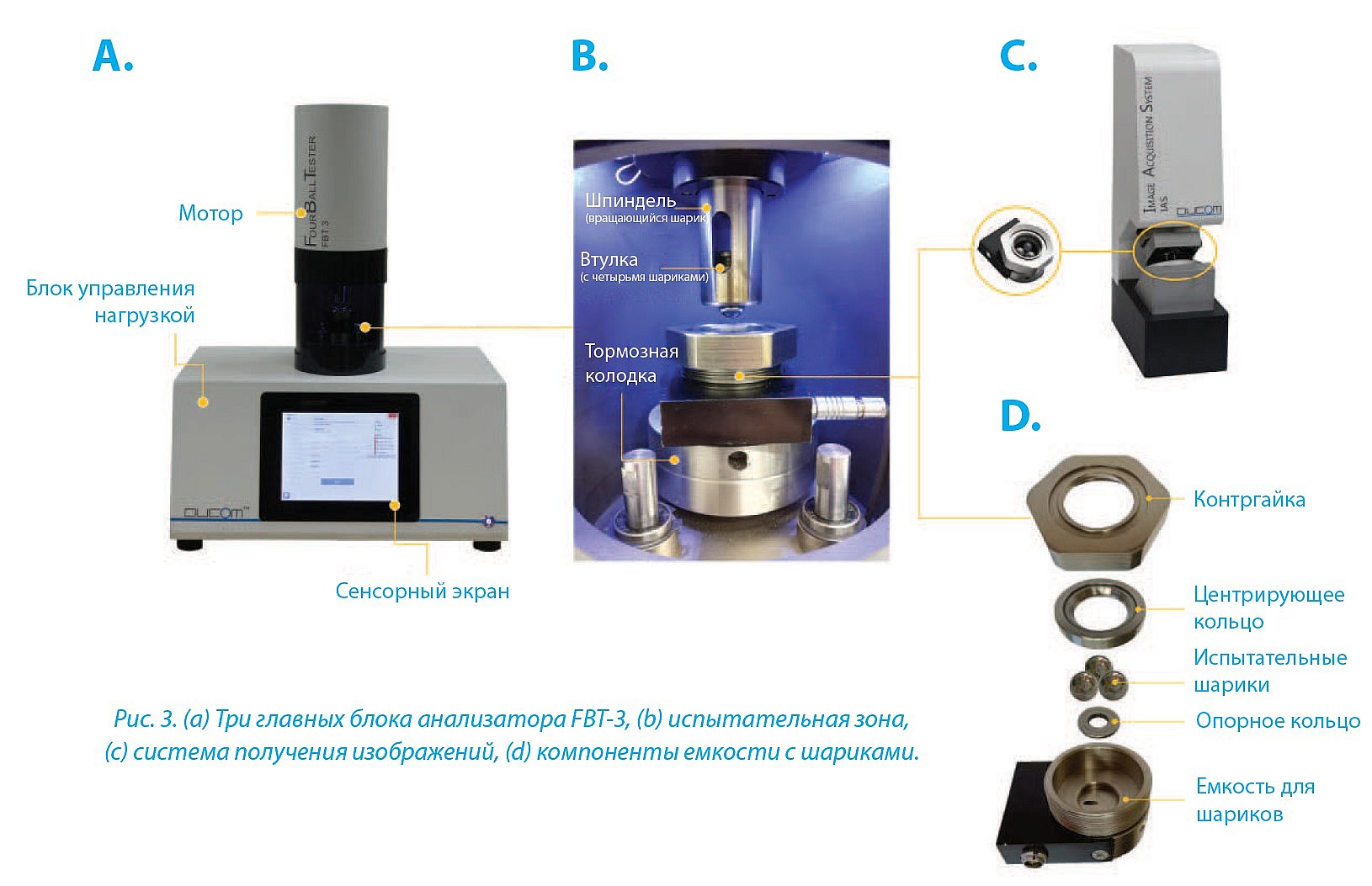
The method of removing a ball from a container and then identifying and measuring the trace of wear on the ball is very inconvenient and is becoming a thing of the past. The DUCOM imaging system is designed to improve user convenience and save time wasted due to manual analysis. As shown in Fig. 3c, this system can completely accommodate a container of beads after EP or WP testing. The patented imaging system allows wear scar detection and a snapshot of the wear scar to be taken on each ball in the container automatically using ScarView 2016 software. Analytical tools in the software help the user quickly measure the diameter and area of the wear scar.
The FBT-3 has 4 important systems. A load cell is used to transmit fluctuations in the applied load during testing. A friction force sensor connected to the ball container transmits the friction force experienced by the lubricant in the container in real time. The thermocouple and heaters in the bead container can heat the lubricant to a user-specified temperature and transmit a temperature curve during testing. The motion sensor can transmit spindle rotation vibrations in real time during the test. The entire sensor system is controlled and its data is displayed/recorded using WinDUCOM software.
STANDARDSEP PROPERTIES
ASTM D2783
EP Lubricant TestASTM D2596
EP Grease TestingIP 239
EP and AW testing of liquid lubricantsDIN 51350-2
EP tests of properties of liquid lubricantsDIN 51350-4
EP testing of solid lubricantsANTI-WEAR PROPERTIES (WP)
ASTM D4172
WP Lubricant TestASTM D2266
WP Grease TestingASTM D5183
Coefficient of Friction of LubricantsDIN 51350-3
Wear tests for liquid lubricantsDIN 51350-5
Wear test for solid lubricantsOPTIONAL FEATURES- High temperature bead container (ambient temperature 200°C)
- Digital laboratory assistant MOOHA
- Automatic ball wear scar prediction using AI machine learning algorithm (Fig. 4).
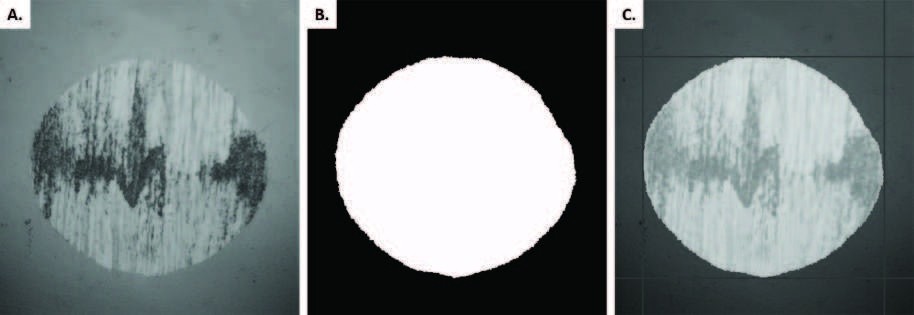
Rice. 4. The MOOHA digital assistant allows you to accurately
predict the wear pattern of the test samples.
(A) real image, (B) automatic mask, (C) predicted spot.
Difficulties in visual observation increase the instability of test results.
The MOOHA digital assistant minimizes the influence of the human factor.DEVICE CONTROL AND DATA ACQUISITIONWinDUCOM software is used to control the load, speed and temperature applied to the lubricant in the FBT-3. The software architecture eliminates mishandling errors. As shown in Fig. 5, The interface allows the user to select any standards with one click. It will automatically reproduce the test parameters corresponding to the selected standard. The user will ONLY make 5 mouse clicks before starting the EP or WP test according to any testing standards. The screen of the data acquisition system displays the values of friction torque, load, speed and temperature in real time (Fig. 6). Data analysis after the experiment is possible using the data comparison function in the software. This allows the user to compare the results of different tests. Test results can be exported in .CSV, .XLS or .TXT format.
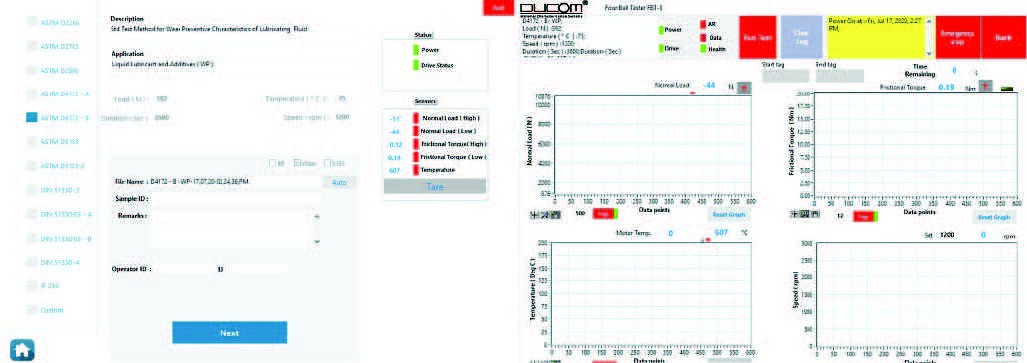
Rice. 5. Loaded test standards into WinDUCOM software in FBT-3.
Rice. 6. Data acquisition system screen with real data in WinDUCOM software in FBT-3.
DIGITAL MODULEMOOHA is a digital lab assistant with powerful features that can help keep your instrument in top condition and your test data safe and easily accessible. Its automatic logging and reporting features ensure reliable data protection from unauthorized access. Find out more at www.ducom.com/digital
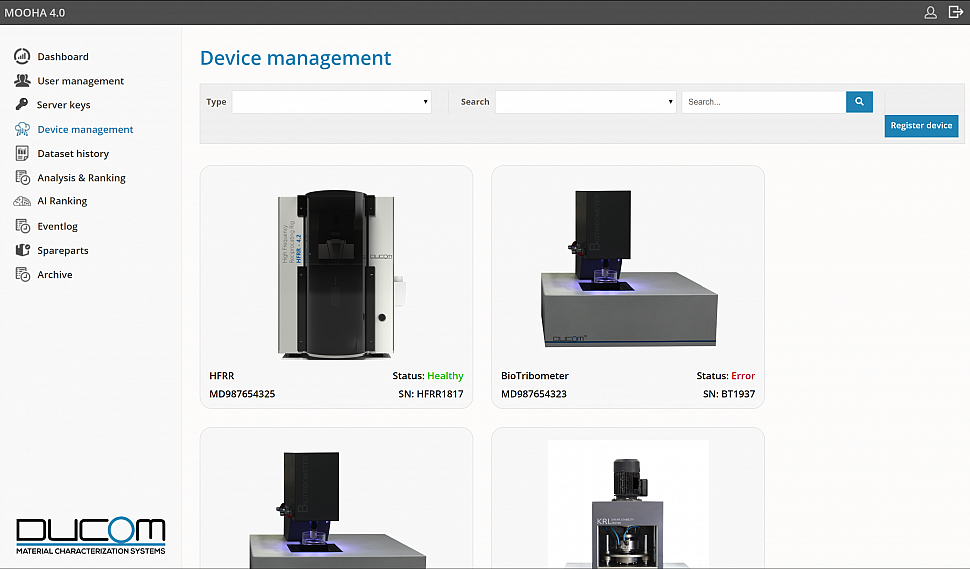
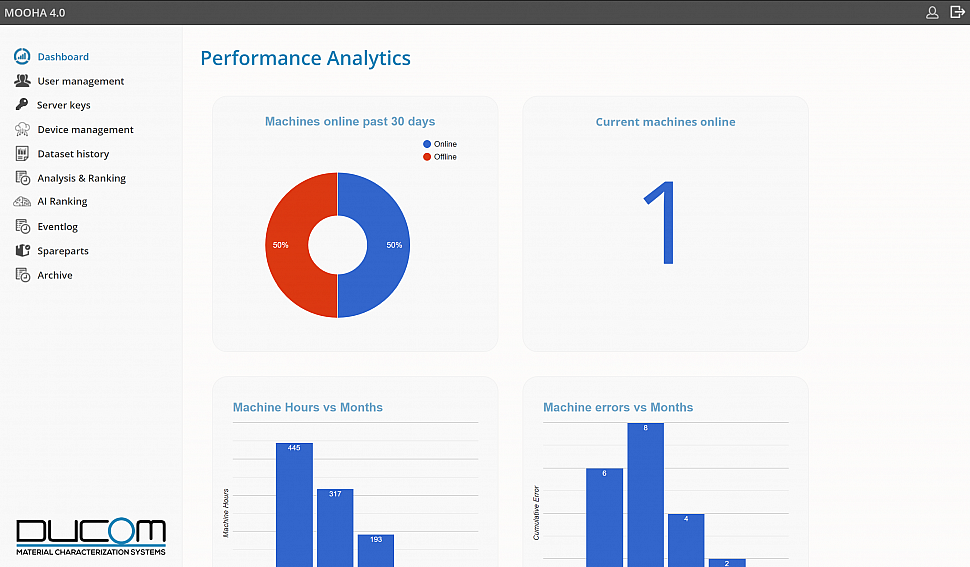
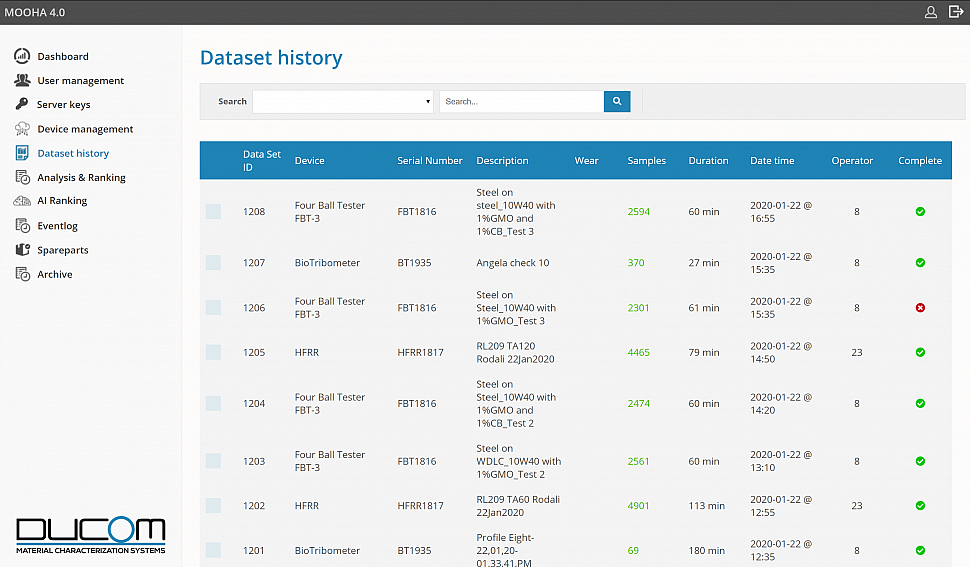
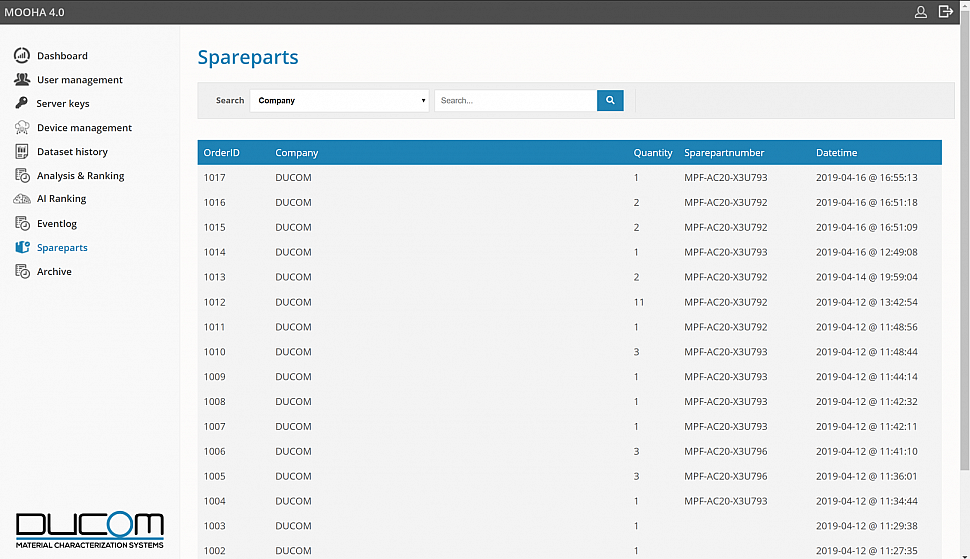
Rice. 7. The following features are available in the MOOHA web-based software:
performance analytics, device management, data history (digital log), spare parts and much more.